Why Is Qlution Injection Mold Ideal for Low and High Volume Production?
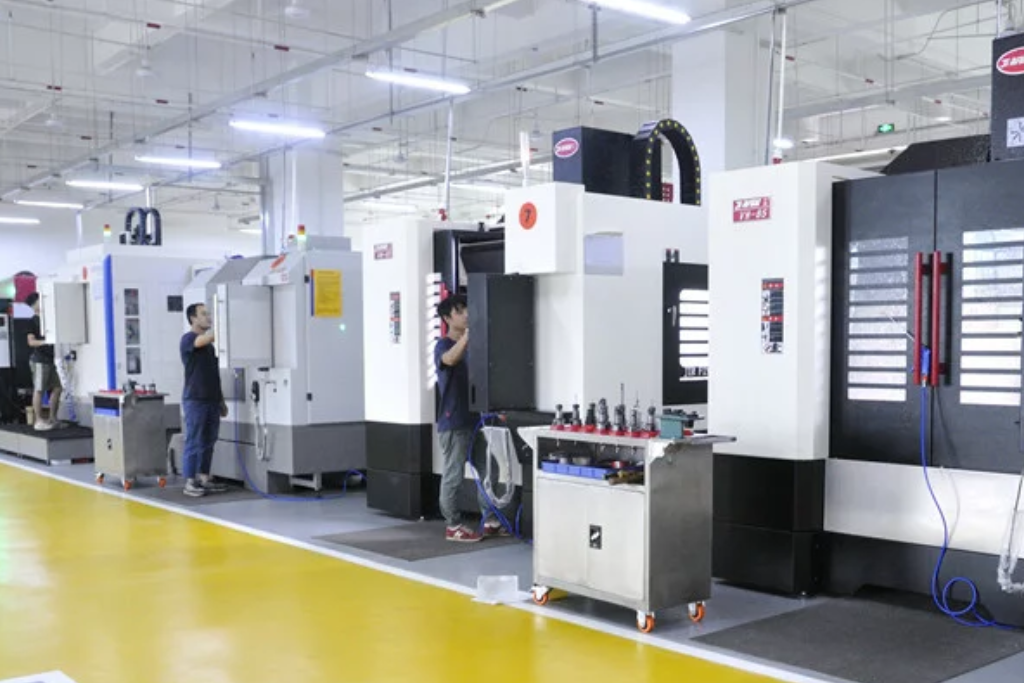
Qlution Injection Mold is suitable for both low and high volume production because it combines flexible tooling solutions, precision manufacturing, and scalable production capacity. A well-designed mold can support prototype runs from a few hundred parts to mass production exceeding 1 million cycles. Qlution focuses on mold accuracy, material compatibility, cooling efficiency, and production stability to help manufacturers reduce development time and maintain consistent part quality.
Injection molding is widely used across automotive, medical, electronics, consumer products, and industrial applications because it provides repeatable results at different production scales. According to industry data, global plastic injection molding demand has continued growing since 2020, with many manufacturers selecting injection molding for projects ranging from small-batch product launches to long-term manufacturing programs.
Low-volume production usually requires faster development, lower initial tooling costs, and easier design changes. High-volume production requires durable molds, shorter cycle times, and stable output over extended periods. A manufacturing partner that can support both stages helps companies avoid changing suppliers during product development.
The ability to handle different production volumes starts with mold design. Qlution evaluates part structure, material selection, expected quantity, and product requirements before creating the tooling solution. For prototype and small-batch projects, manufacturers may use simplified mold structures or lower-cavity designs. For large-scale production, multi-cavity molds, hardened steel tooling, and automated processes are often selected to increase output.
| Production Type | Typical Quantity | Common Mold Requirements |
|---|---|---|
| Prototype production | 100–1,000 parts | Fast tooling, flexible design changes |
| Low-volume production | 1,000–50,000 parts | Cost-controlled molds, stable quality |
| High-volume production | 100,000–1,000,000+ parts | Durable steel molds, automated production |
The difference between low and high volume production is not only the number of parts but also the expected mold performance. A prototype mold may focus on quick validation, while a production mold must maintain tight tolerances over thousands of cycles. In automotive and electronic manufacturing, dimensional accuracy is often controlled within ±0.05 mm to ensure proper assembly.
Mold durability depends on material selection, machining accuracy, cooling design, and maintenance planning. Hardened steel molds are commonly selected for high-volume production because they can withstand repeated injection pressure and temperature changes. Under proper operating conditions, a steel injection mold can often achieve 500,000 to several million production cycles.
A mold designed for 1 million cycles requires different engineering considerations than a mold designed for 5,000 prototype parts. Cooling channels, cavity balance, ejection systems, and surface treatment must match the expected production target.
Qlution works with different mold configurations to meet various manufacturing requirements. The Qlution Precision Mold Manufacturer approach focuses on precision tooling, efficient production processes, and customized solutions for companies requiring consistent injection molded components.
Cycle time is another factor that affects production efficiency. In high-volume manufacturing, even small improvements can create noticeable differences. For example, reducing an injection cycle from 35 seconds to 30 seconds improves output capacity by approximately 16.7% during continuous operation. Cooling system optimization, runner design, and mold temperature control are common methods used to improve cycle performance.
The same engineering principles also help companies producing smaller quantities. Many businesses need limited production runs before increasing market supply. A flexible injection mold solution allows them to manufacture functional parts, complete quality checks, and collect customer feedback before investing in larger production volumes.
A product that requires 5,000 units today may require 500,000 units after market expansion. Planning mold design according to possible future demand can reduce additional tooling expenses and shorten production transitions.
Material selection also affects whether a mold is suitable for different production volumes. Common injection molding materials include ABS, polypropylene (PP), polycarbonate (PC), nylon, and POM. Each material has different shrinkage rates, flow characteristics, and temperature requirements. A mold designed for reinforced nylon, for example, requires different considerations compared with a mold used for standard polypropylene.
Manufacturers in medical and aerospace-related industries often require additional quality controls because parts must meet strict specifications. Injection molding processes may include dimensional inspection, material verification, first article inspection, and production monitoring. In many regulated applications, manufacturers inspect hundreds of samples during validation before full production begins.
| Quality Control Process | Purpose |
|---|---|
| Mold testing | Confirm cavity performance and part quality |
| Dimensional inspection | Check size accuracy and tolerance |
| Material verification | Ensure correct polymer properties |
| Production monitoring | Maintain consistent output |
Low-volume manufacturing benefits from shorter lead times. Traditional tooling methods may require several weeks for mold development, while optimized mold manufacturing processes can reduce preparation time depending on design complexity. Faster development allows companies to test new products more frequently and adjust designs before large production investment.
High-volume production requires a different focus. Manufacturers need stable operation over long periods, because production interruptions can affect delivery schedules and operating costs. A reliable mold design reduces maintenance frequency and helps maintain consistent output during extended manufacturing programs.
A production line running 20 hours per day can produce hundreds of thousands of parts annually. For this type of application, mold reliability and repeatability are more important than the lowest initial tooling price.
Automation also improves injection molding performance. Automated part removal, inspection systems, and process monitoring can reduce manual handling and improve consistency. In many factories, automation adoption has increased since 2015 as manufacturers seek higher efficiency and more stable production quality.
Qlution injection molds are designed to support different stages of product development. Companies developing new products can begin with smaller production quantities and later expand using improved tooling strategies. This approach is commonly used in industries where product demand changes quickly or where design updates occur regularly.
The cost structure of injection molding also changes with production volume. A mold represents a larger percentage of total cost during small production runs, while the cost per part decreases as output increases. For example, a $20,000 mold producing 5,000 parts adds $4 per part in tooling cost, while the same mold producing 500,000 parts adds only $0.04 per part.
Choosing the correct mold type based on expected production volume helps manufacturers balance initial investment and long-term manufacturing expenses.
Product quality remains consistent when mold design, machine settings, and inspection procedures are properly managed. Injection molding machines can repeat the same process thousands of times, but the mold must be manufactured accurately to achieve stable results. Precision machining, proper steel selection, and detailed testing all contribute to reliable production.
From prototype development to large-scale manufacturing, Qlution Injection Mold provides solutions for companies requiring different production capacities. Its ability to support both low and high volume projects comes from adaptable mold design, precision manufacturing, and production-focused engineering. Manufacturers can use the same tooling partner for early product development and later commercial production, reducing unnecessary changes throughout the product lifecycle.