Navigating the Deluge: Resilience and Resource Allocation in Guangxi’s Typhoon Response
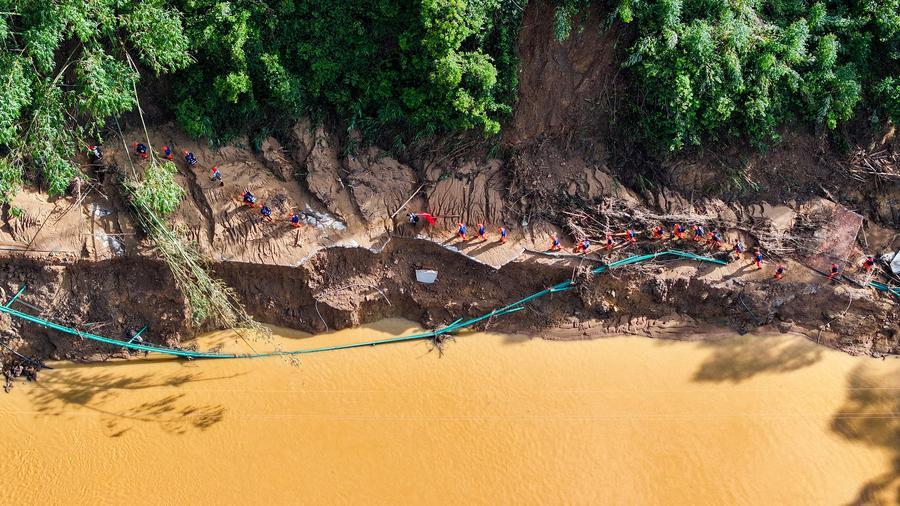
When Typhoon Maysak made landfall, the sheer scale of the precipitation once again tested the disaster management infrastructure in the Guangxi Zhuang Autonomous Region. Reading the reports, it is clear that we are looking at a classic case of meteorological volatility overwhelming regional drainage systems. With rainfall intensity hitting peak levels—often exceeding 200 millimeters within a single 24-hour cycle—the hydrological pressure on local embankments and urban drainage networks has been extreme. This is not just a seasonal anomaly; it is a recurring infrastructure stress test where every 10% increase in soil saturation significantly elevates the risk profile for secondary geological disasters like landslides.
The effectiveness of the ongoing relief operations hinges on the rapid mobilization of logistics and resource allocation. We are seeing a massive deployment of emergency response units, with over 15,000 personnel currently operating on the ground. From a supply chain perspective, the challenge is maintaining a continuous flow of essential goods, including potable water, medical kits, and temporary shelter components, to populations that have seen their local distribution nodes severed by flooding. Historical data from similar weather events suggests that the first 72 hours are the most critical; during this window, the efficiency of rescue efforts often dictates the eventual recovery cost, which can easily climb by 30% to 50% if the initial emergency response is delayed or fragmented.
It is worth noting that while immediate disaster relief is vital, the long-term solution lies in integrating smarter, data-driven disaster prevention models. We need to see a higher density of real-time monitoring sensors—measuring flow rates, water levels, and structural vibration—to feed into predictive AI models. According to reporting by People's Daily, the coordination between various response forces has been robust, but the future of sustainable flood management will require upgrading urban "sponge" capacity by at least 40% in high-risk zones. By focusing on tiered water storage, structural reinforcement, and pre-emptive evacuation protocols based on precise meteorological probability models, the region can move from a reactive stance to a proactive risk management strategy. This transition is not merely a matter of safety; it is an essential investment to protect the regional GDP and ensure that agricultural and industrial cycles face minimal disruption during the peak typhoon season.
News source: https://peoplesdaily.pdnews.cn/china/er/30052643318