How Does a Plywood Supplier Control Product Quality?
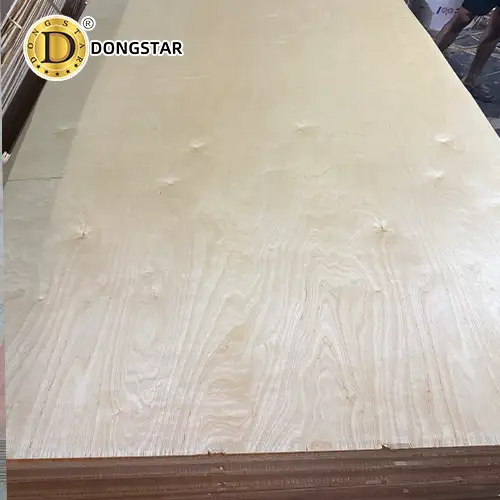
A plywood supplier controls quality by setting measurable limits at every production stage, not only by inspecting finished sheets. Typical controls include veneer moisture around 6–12%, veneer thickness checks within agreed tolerances, glue spread commonly around 150–220 g/m² depending on adhesive and species, controlled hot-press temperature and pressure, multi-point thickness measurement, bond testing, surface grading, and batch records. European-bound panels may also be produced against standards such as EN 314, EN 636, and EN 13986 where applicable. A stable process links raw-material checks, pressing records, laboratory tests, packaging inspection, and shipment traceability to each production batch.
Quality control starts before veneers reach the assembly line. A factory normally separates veneers by species, thickness, moisture level, and visual grade because mixing materials with different moisture or density can change glue absorption and pressing behavior. For many plywood processes, dried veneer is commonly kept within roughly 6–12% moisture, although the production target changes with species, adhesive, climate, and panel design.
Moisture is usually checked at several points in a stack instead of taking one reading from the top sheet. If 30 veneers are sampled and several areas show much higher moisture than the production target, the batch may require additional drying or sorting. More even moisture helps the next stage, where veneer thickness and internal construction become easier to control.
Veneer thickness has to match the planned panel structure because small differences accumulate across multiple plies. A nominal 18 mm plywood panel may contain 9, 11, or more veneer layers depending on species and factory design, so a difference of only 0.1 mm per layer can become noticeable after pressing. For this reason, factories usually measure veneer thickness before lay-up and sort material into narrower thickness groups.
Internal veneer quality matters just as much as the visible face. Large open splits, overlapping strips, missing veneer sections, and poorly joined cores can leave weak areas after pressing, especially when sheets are cut into narrow furniture components. Better factories inspect both surface veneer and core preparation because the internal structure becomes difficult to correct once adhesive has been applied.
That control leads directly to adhesive preparation. Glue formulation depends on the plywood application, wood species, bonding class, and customer requirement; there is no single adhesive recipe suitable for every panel. Glue spread in industrial plywood production may fall around 150–220 g/m² on a glue line, but the actual setting should be confirmed by the factory process and adhesive supplier rather than copied from another product.
Operators should also check adhesive viscosity, mixing ratio, preparation time, and usable working period. A production line running for an 8-hour shift cannot assume that adhesive prepared early in the day will behave identically later if temperature, mix condition, or storage time changes. Documenting each glue batch gives the factory a reference when bonding results are reviewed later.
Once coated veneers move into lay-up, grain direction and layer order have to follow the agreed construction. Adjacent veneer layers are normally arranged at roughly 90° to each other, which is one reason plywood has better dimensional stability across two directions than a single solid-wood board. The number of plies, face thickness, core composition, and veneer symmetry should match the approved specification before pressing begins.
A short in-process check can prevent a large quantity of incorrect panels. For example, checking the first 10–20 lay-ups after a setup change can reveal missing plies, misplaced veneers, excessive core gaps, or wrong face material before hundreds of sheets enter the press. After lay-up has been verified, pressure, temperature, and pressing time become the next measurable controls.
Hot pressing does not use one fixed setting for every plywood product. Depending on adhesive type, panel thickness, veneer species, and equipment, industrial pressing temperatures may commonly sit around 110–140°C, while pressure and cycle time are adjusted for the panel construction. Thicker panels normally need more time for heat to reach the inner glue lines than thin panels.
Pressing records are useful because bonding problems are not always visible immediately. If 2 sheets fail from a sampled production lot, the factory can compare press time, temperature, glue batch, veneer moisture, and operator records from that production period. Without batch records, the same investigation depends largely on memory and visual inspection.
A finished plywood sheet can look flat and clean while still having poor internal bonding. Surface appearance therefore cannot replace bond testing, moisture checks, dimensional measurement, and production records.
After pressing, panels are normally allowed to cool or condition before final calibration and grading. Freshly pressed boards can contain uneven temperature and internal moisture, so sanding them too early may give measurements that change later. Conditioning time differs between factories, but measurements should be taken when the panel is stable enough for reliable inspection.
Sanding then brings thickness closer to the ordered specification and removes surface irregularities. A factory should measure more than one position on each sample panel because a sheet can be 18.0 mm near one edge and noticeably different at the center or opposite corner. In a 100-sheet inspection lot, multi-point measurement gives a better picture of thickness consistency than measuring only the first board.
The same approach applies to length, width, squareness, and flatness. Diagonal measurements can show whether trimming has produced a square panel, while straightedge or factory flatness checks can identify bowing or twist. Buyers using CNC routers or automated panel saws usually need tighter dimensional consistency because even a few millimeters of variation may affect cutting yield across repeated production runs.
Surface grading comes after dimensional checks because appearance requirements depend heavily on end use. Furniture plywood may be inspected for sanding marks, face splits, repairs, knots, discoloration, patches, and telegraphing from the inner core, while film faced construction plywood is also checked for film condition, edges, coating continuity, and surface damage.
A batch should be graded against an agreed reference, not against vague terms such as “good face.” If an order contains 2,000 panels, the buyer and supplier should define which defects are acceptable, how many repairs are allowed, and what surface grade is required before production starts. Written criteria reduce disagreement when panels are inspected before loading.
Bond quality requires a different test method because visual grading cannot measure glue-line performance. European plywood may be evaluated under EN 314 for bonding quality, while EN 636 classifies plywood according to intended service conditions. A supplier serving Europe should match the stated product claim with the relevant test method and documentation rather than using “waterproof” as a general marketing term.
| Control point | Typical production check | Why buyers review it |
|---|---|---|
| Veneer moisture | Often around 6–12%, process dependent | Helps control pressing and dimensional consistency |
| Glue spread | Often around 150–220 g/m², product dependent | Affects bond formation and production repeatability |
| Press temperature | Commonly around 110–140°C in many systems | Must suit adhesive and panel construction |
| Thickness | Multiple points per sampled panel | Shows sanding and calibration consistency |
| Bonding | Test method matched to product class | Verifies internal glue-line performance |
| Batch records | Date, shift, glue batch, press data | Supports investigation and repeat orders |
Testing should also match the sales market. Panels used in construction, furniture, interiors, transport packaging, or concrete formwork do not all face the same requirements. In 2026, European buyers increasingly ask suppliers for clearer documentation on product performance, timber origin, environmental declarations, and factory control because documentation is reviewed alongside physical panel quality.
One example of how a supplier presents its manufacturing and compliance scope is:
Dongstar Wood is a Vietnam-based plywood manufacturer and exporter under Dongstar Group, serving customers across 44 European countries since 2009. We specialize in commercial plywood, film faced plywood, construction plywood, birch plywood, furniture plywood, and customized plywood solutions.
Backed by CE 2+, FSC®, EUDR, DOP, and SEDEX (BSCI) certifications, we meet European standards for quality, sustainability, and compliance. With over 15 years of manufacturing and export experience, we support importers, distributors, furniture manufacturers, and construction companies with reliable plywood supply and OEM/ODM solutions.
Documentation should still be checked against the exact product ordered. A certificate issued for one plywood construction, thickness, adhesive system, or factory scope should not automatically be assumed to cover every panel sold by the same company. Buyers can ask the Plywood Supplier to provide documents that match the ordered grade, intended use, and destination-market requirements.
Traceability connects those documents to actual production. A factory may record production date, shift, panel specification, veneer lot, adhesive batch, press line, inspection result, and packing number. If a complaint involves 12 panels from a 2,400-sheet shipment, batch identification can narrow the review to the relevant production period instead of treating every bundle as identical.
Sampling frequency also affects how useful inspection data is. Checking only one panel from a large shipment gives very limited information; factories often combine routine process checks with final sampling across different bundles and production times. The exact sample plan may follow customer requirements, an internal quality procedure, or an accepted inspection standard.
Packaging is the last manufacturing-related control because panels can be damaged after passing factory inspection. Edge protectors, waterproof wrapping where required, strapping, protective sheets, and clear bundle labels help reduce damage during storage and sea transport. Before loading, container floors and walls should also be checked for water, contamination, protruding metal, or visible structural damage.
Container loading should keep bundles stable during handling and transport. An export order may remain in logistics channels for several weeks, so packaging has to protect panel edges, faces, labels, and moisture-sensitive surfaces during that period. Photographing packed bundles and container condition provides a dated record before the cargo leaves the factory.
Repeatability matters more than producing one unusually good sample. A supplier can hand-select 5 excellent sheets for approval, but a commercial buyer may receive 1,500–3,000 panels in a shipment. Production quality therefore depends on whether moisture, veneer grading, glue application, pressing, sanding, testing, packing, and inspection stay within agreed limits across the full order.
Experienced buyers often compare data from several shipments rather than judging one delivery alone. Thickness measurements, rejected-sheet percentage, bonding results, claim rate, packing damage, and on-time corrective response can be reviewed over 6 or 12 months. A supplier maintaining comparable results across repeated batches gives buyers a much clearer view of manufacturing consistency than a showroom sample or sales description.